Motherhood is a more important task for the good of society than any other private occupation or public service. We, as a society, need to find a way so that no woman who would choose full-time motherhood should be unduly constrained by economic or social pressures to give up her all-important vocation.
Christopher Dawson was an English historian who, in the 1930s, explored history from the aspect of culture. A convert to Catholicism he recognised that cultures have a spiritual underpinning. His interest was in the character of Western Civilisation, but he also explored Buddhism, Hinduism, Islam, Judaism, and primitive religions, as well as legend and myth. His central contention was that religion is necessary foundation for development of culture.
Several times in his letters St Paul speaks of “principalities and powers”. For example, in his letter to the Ephesians in speaking about the spiritual struggle that all Christians are involved in he comments that we are not just fighting against “human enemies” but against the “Sovereignties and the Powers who originate the darkness in this world”. He continues and refers to them as “the spiritual army in the heavens”. St Paul is conscious that there are supernatural powers of darkness at work in the world (see Eph 6:12).
It appears that abortion is now an accepted reality in our culture. Yet, as people of faith, we are deeply conscious that it is a great evil, a blight on our society. So how do we, as people of faith, respond to the issue of abortion?
Time is the linear progression measured in minutes and hours. And time passes so quickly. Time, however, also has its moments. Time can be set aside for the restoration of our inner personal life. This is God’s good intention when He commanded that the sabbath be a holy day and a day of rest.
Social contagion is a curious phenomenon. Scottish journalist Charles Mackay published a book in 1841 on popular delusions. He commented, “Men, it has been well said, think in herds; it will be seen that they go mad in herds, while they only recover their senses slowly, one by one”.
The struggle for religious freedom, freedom of speech and freedom of conscience is an important one for Christians in twenty-first century Australia.
The more Christians unite together and want to work together in the cause of life, the more effective will be the witness to the society around them. The voices are raised in harmony and common purpose.
Grandparents play a vital role in nurturing their grandchildren’s faith by sharing stories, modelling faith in daily life, and providing a sense of continuity and connection to family traditions and values which have their origin in the Christian faith.
The assassination of Charlie Kirk while speaking with students at Utah Valley University was a great tragedy, firstly for his wife and two young children, and secondly for the cause of free speech in a democratic country.
Ralph Martin has been a prophetic voice in the Church for over fifty years. Like the prophets of old, his message disturbs and is met with resistance. It seems now that he has had to accept the cost of being a prophet.
A number of media reports are speaking of a trend that indicates increasing numbers of Gen Z, or ‘post millennials’, are turning to Christianity, many seeking out the Catholic Church.
The ARC movement is a significant initiative as men and women of good will seek a restoration of what is best in Western civilisation. In the end it will be the resurgence of Christianity that will provide the key impetus for this to occur.
There has been universal joy at the choice of Cardinal Robert Prevost, who has taken the name Leo XIV, as our new pope. We witnessed extraordinary scenes as the white smoke appeared from the Sistine Chapel and large crowds quickly gathered in St Peter’s Square, anxious to learn who was to be the new bishop of Rome and Pope for the universal Church. The Mass to inaugurate his papacy attracted world leaders and, again, a large crowd, and we witnessed the noble splendour of the Roman liturgy.
One of the blessings of being a bishop is the opportunity to meet the Pope. Over my twenty-one years as a bishop I have met three popes (John Paul II, Benedict and Francis), each on several occasions. I have met Pope Francis on a number of occasions, the most recent being in February this year, just shortly before he was confined to hospital.
Recently Hobart Private Hospital announced that it would be closing its maternity ward by August this year. Healthscope, the company managing Hobart Private, has also closed its maternity wards in other locations across Australia as well. The company as a whole is facing serious financial challenges.
The confusion now in the minds of so many who no longer have God as their reference point is one reason for the rise of ideology. Ideology turns a person in on themselves. When recognition of the reality of God is accepted then human life is teleological. It has purpose and a goal and we look beyond ourselves. Accepting living by a moral code then becomes the foundation for meaning and direction, and the source for true human flourishing.
A parliamentary inquiry into bullying and discrimination in schools in Tasmania has provided an opportunity for Catholic schools to present data
confirming that our schools are safe places for students, providing a healthy environment in which students learn and grow.
Once a minister of the Christian religion enters a way of living which is at variance with the teaching of Sacred Scripture and the Christian tradition, the very foundation of their ministry no longer exists.
The recent mass walkout by staff and students at a Graduation Ceremony at the Australian Catholic University, Melbourne campus, during a speech by Joe de Bruyn who had been granted an honorary doctorate, raises the question of the nature and role of a Catholic university in today’s intellectual and social climate.
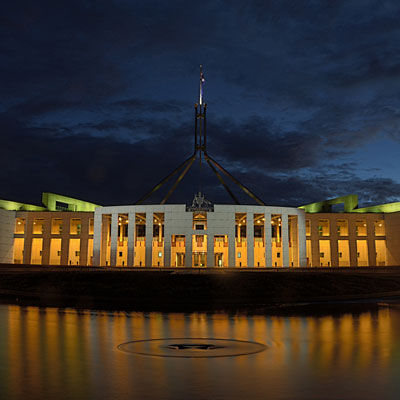
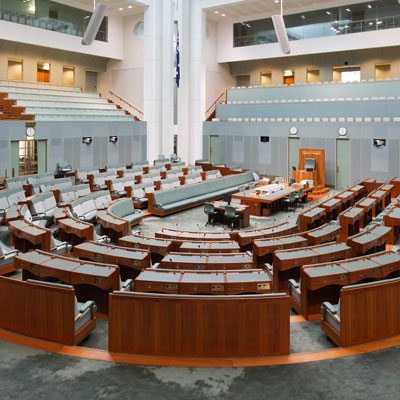
Our system of government in Australia is technically a constitutional monarchy, that operates through a parliamentary democracy. However, it is typically referred to as a liberal democracy, in that one of the central guiding ideals is that of the importance of human freedom, and this freedom is to be defended by the government.
Respected Catholic layman, Joe de Bruyn, recently addressed graduating students at the Australian Catholic University and urged them to stand by what they believe to be right and true. He said to the students, “As happened to me, you will be faced with issues in your professional and personal lives where the general opinion of the majority of the population is at odds with the teaching of the Church”. He commented that many fear that expressing what they believe could harm their professional lives. He said that his own experience had been that it was possible to hold to what you believe in and maintain your career.
Politicians and the intellectual elites have lost sight of the importance of family in the ordinary life of ordinary citizens. Yet, family is what people want. Little is done to recognise and support family life. People are seen as independent economic units rather than situated with the sphere of the family.
DEI assigns benefit not to the individual as a person, but to the individual based on their group identity. In this regard the promotion of DEI can be the promotion of a certain ideological position which is at variance with the Christian understanding of the human person.
We are witnessing a significant shift in attitudes towards having children in many countries across the world. We have now reached a point where over half of all nations are below replacement levels of 2.1 births per woman.
Far from being overpopulated, our world now faces a demographic winter in the form of underpopulation. The lack of support for marriage, understood as directed to procreation and family life, and the particular lack of support for big families, now threatens the very viability of a number of societies in the western world.
On 10 May 2024, the Productivity Commission, which conducts economic research at the request of the Federal Government, released a report entitled ‘Future Foundations for Giving’. This report should raise some serious alarm in relation to recognising the religious freedom of charitable organisations to operate in accord with their religious foundations.
Christians face persecution in a variety of forms, from government oppression, to cultural hostility, from extremist attacks, to official religious domination and violations of religious freedom. It is now a common experience for so many Christians and it is true that Christianity is the most persecuted religion in the world. Persecution of Christians is on the rise across the world, and it is finding a place now even in traditionally Christian countries. For example, 85 Catholic churches have been burned down in Canada over the past few years.
As an essential element to his ministry, a bishop has the responsibility to ensure the integrity of the faith taught and lived within his diocese.
The Church has been a powerful advocate for the dignity of the human person. While political systems which have been developed without the influence of Christian faith and practice need assistance to understand the significance of this God-given dignity, it is also true that as many traditionally Christian countries need to be reminded of the Christian roots of this ideal. They increasingly reject the Christian understanding which has been essential to the idea of human dignity in Western societies. It is necessary for the voice of the Church to speak up.
Postmodernism and its view that truth is subjective has taken a vice-like grip on the minds of so many in our society. Reducing truth to my own personal perception of reality has meant that a sense of objective moral right and wrong has evaporated. It has also meant that argument from reason has no place. All is now fuelled by emotion.
The future of democracy will depend on whether Christians can make such a contribution and whether those in government and, indeed, all voting citizens come to see that the Christian faith is not the problem, but instead provides and defends the fundamental truth about the human person necessary for the existence of authentic democratic government.
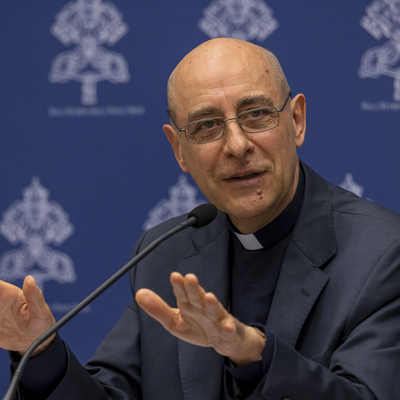
The Dicastery for the Doctrine of the Faith has recently released a document which it called a “Declaration on Human Dignity”. The publication of this declaration is very timely indeed. When the freedom of the Church to teach what it believes about the nature of the human person and the purpose of human sexuality is being challenged and efforts are being made to prevent the Church from teaching what it believes, this document is an encouragement to Catholics.
The Church has consistently maintained that parents, who are the first and primary teachers of their children, have the right to choose a school which accords with their beliefs and values. Our Catholic schools need to be able to teach and fully embody the Catholic faith and employ staff that are committed to respect and uphold the faith in the classroom.
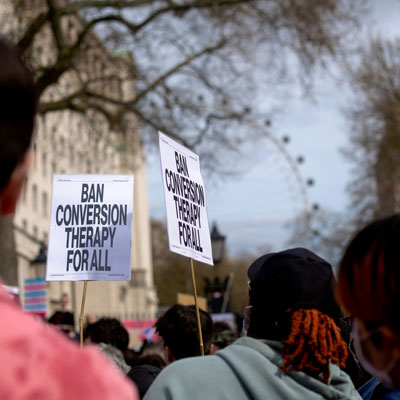
We can all agree that no one should be forced to undergo any coercive practice or treatment against their consent, and there are laws currently in place which make this illegal. These laws could be strengthened if necessary but as yet there is no clear evidence from any public enquiry or the experience of the police that such practices are occurring. This is not the real focus of so called ‘conversion therapy laws’. The real focus is to put in place legal penalties for those who do not publicly affirm the ‘LGBTQI’ view of the person or sexual morality.
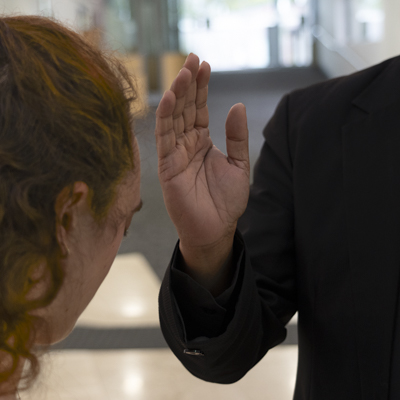
A person seeks a blessing for the purpose of receiving spiritual assistance to live out his or her faith. This is the fundamental nature of any Catholic blessing. It means therefore that there are some basic conditions or requirements which must be present before a priest can give a blessing.
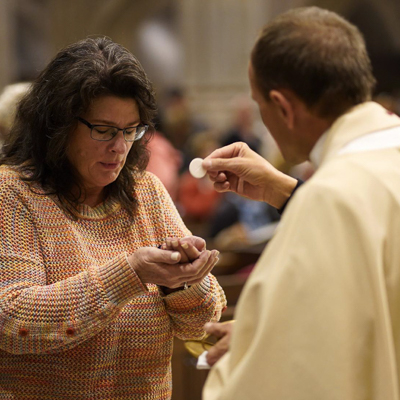
A Catholic in receiving Holy Communion is not just brought into a personal communion with the Risen Lord. There is a communal level as well to be considered. It is an act which signifies not only a spiritual union with other members of the Church, but it is also a public affirmation of the beliefs of the Church and a commitment to the practice of the faith as it is defined by the Church.
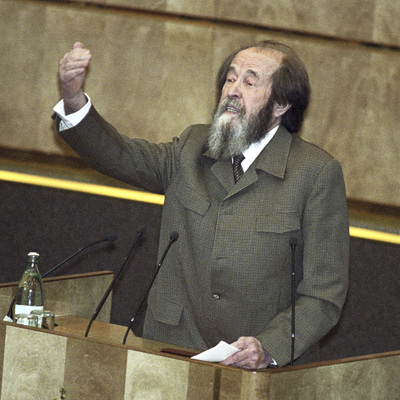
Alexander Solzhenitsyn recognised from first-hand experience how a totalitarian government seeks to exercise complete control even over the thinking of its citizens. While we in the West are not subject to such comprehensive processes of control, it is not to say that they do not exist. To preserve the precious gift of personal freedom we need to decide not to live by lies.
In the current discussion concerning the governance of the Church occasioned by the proposal of synodality, reflection on the divine plan for the Church is important. We cannot allow ourselves to depart from the divine plan.
There is a popular hymn sung in parishes and schools with the words, “all are welcome in this place”. In recent times there has been a great deal of emphasis placed on the Church being a place of welcome, and rightly so. We are open to receive anyone who wishes to participate in the life of the Church. We take our cues from Christ himself who reached out to those whom Pope Francis describes as being on the ‘peripheries’.
The path of genuine reconciliation will only be advanced when a just process has been followed, when there is both sorrow and forgiveness for past harm. This is by no means an easy path, many of our indigenous brothers and sisters remain deeply traumatised by what has happened historically, but it is clear that this is the goal we must work together on achieving. This requires both human effort and prayer, and ultimately divine grace.
In the listening process a person, then, grounds him or herself in the faith of the Church. We are reminded that the Holy Spirit does not act independently of the Church and the apostolic faith. The role of the Holy Spirit is actually to confirm the faith and help the faithful to enter more into the fulness of the faith.
Freedom of religion should be acknowledged as a fundamental civil right and enjoyed by all. This right should prevent the government from restricting the free expression and practice of religious beliefs.
A study of the history of humanity reveals that the great civilisations and the moral structures that underpinned them found their stability in a reference point beyond themselves.
The Church is found in all who live a life in the Spirit. It is often true that it is in the ‘little ones’ where the Church is truly alive and active. It is in their hearts and lives that the Church truly lives. It is their faith, their love of God, their charity, that incarnates the love of God in the world. It is through them that Christ is present in the world.
We live in an age of ideology. One of the reasons for this is the demise of Christian belief and cultural patterns shaped by Christianity that have, in the past, shaped and directed western civilisation. In Catholic thought faith and reason are not in opposition to one another but complement and complete each other.
The promotion of certain values by the Australian government is an effort to arrive at a social consensus which would then promote a harmonious society. This is a worthy aspiration. But it is also true, that a society without an accepted transcendent foundation, as our Australian society now is, faces serious challenges to maintain a commitment to these values.
A confusion has arisen in our society when we replace the category of the person’s biological sex with a subjective concept of gender. It is the result of a loss of a sense of truth which has been fostered by a loss of a sense of God.
The first duty of a believer is to offer worship to God. For Catholics this is expressed in the Sacred Liturgy of the Mass when we are invited to join with the angels and saints in worshipping and glorifying God.
It is the time of Dark Mofo once more. A decade on and, once again, it seeks to attack and ridicule sacred images and truths of Christianity.